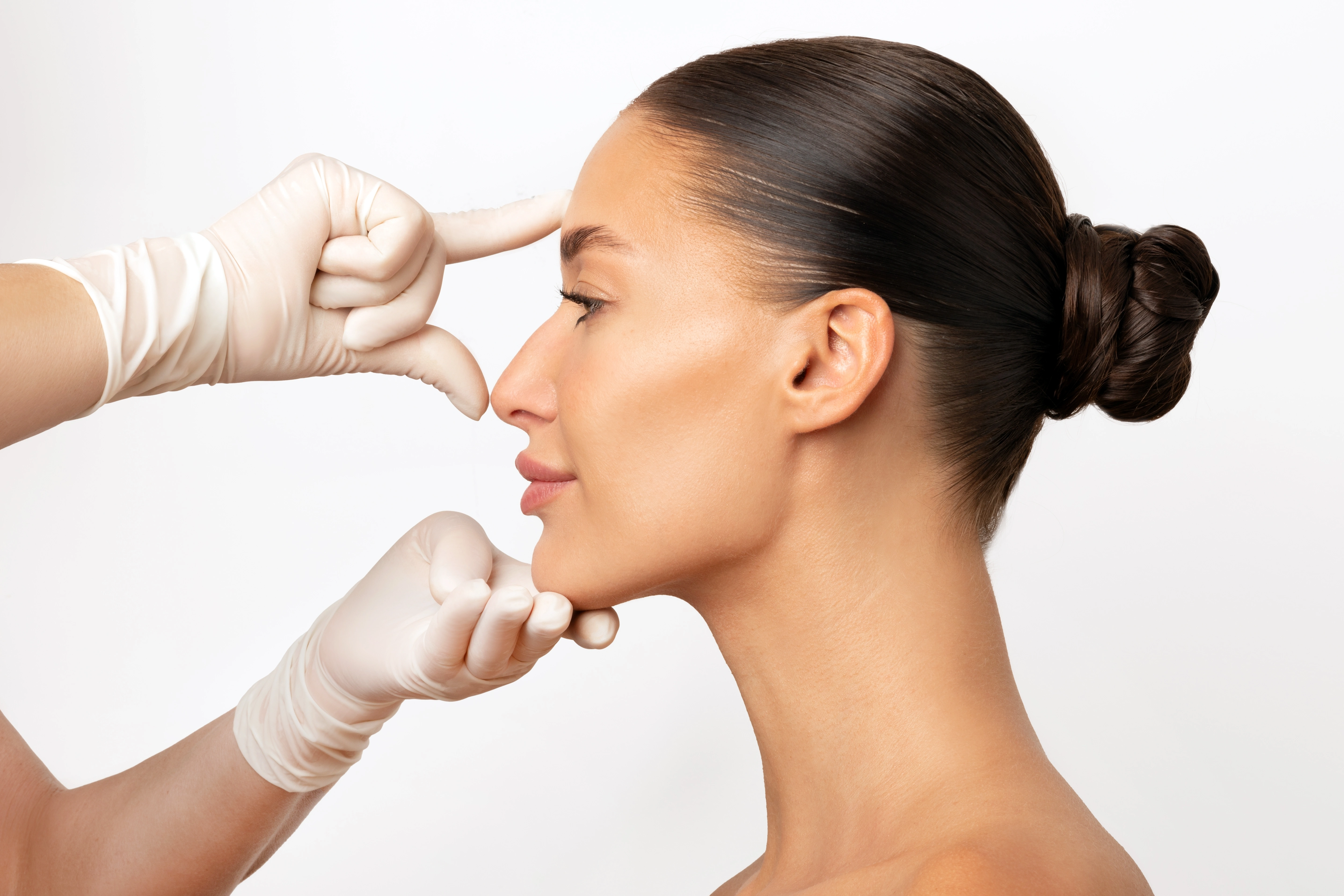
Rhinoplasty, commonly known as a nose job, is one of the most popular procedures in plastic surgery. It is performed to improve the shape, size, or proportions of the nose while also addressing functional issues such as breathing problems.
Beyond aesthetics, rhinoplasty often enhances facial balance and harmony, offering patients both cosmetic improvement and improved quality of life.
How Does Rhinoplasty Work?
There are two main techniques:
- Open Rhinoplasty: The surgeon makes a small incision at the columella (between the nostrils). This allows better visibility and precision for complex corrections.
- Closed Rhinoplasty: Incisions are made inside the nostrils. It is less invasive, leaves no visible scars, and is preferred for minor adjustments.
Step-by-Step Process:
- Consultation & Planning – Facial analysis, photographs, and 3D simulations to design the new nose.
- Anesthesia – Local with sedation or general anesthesia for comfort.
- Surgery – Cartilage and bone are reshaped, grafts may be used if necessary.
- Closure – Incisions are closed carefully to minimize scarring.
- Post-Op Care – Splints or bandages are applied for protection.
The procedure typically lasts 2–3 hours.
Benefits of Rhinoplasty
- Improved nasal shape, size, and symmetry.
- Better facial balance and harmony.
- Correction of structural problems (such as deviated septum).
- Boost in self-confidence and psychological well-being.
- Permanent and long-lasting results.
Who Is a Good Candidate?
Rhinoplasty is suitable for:
- Adults aged 18 and above (after facial growth is complete).
- Patients unhappy with nasal appearance (hump, bulbous tip, crooked nose).
- Individuals with breathing difficulties due to nasal structure.
- Healthy patients with realistic expectations.
Recovery Timeline
- First Week: Swelling, bruising, and mild discomfort. Splints are removed after 7–10 days.
- 2–3 Weeks: Most bruising disappears, patients return to work or school.
- 1–3 Months: Swelling gradually decreases, nose starts to refine.
- 12 Months: Final shape and definition become visible.
Rhinoplasty in Turkey
Turkey has become one of the world’s leading destinations for rhinoplasty. Patients from Europe, the Middle East, and beyond travel to Turkey for several reasons:
- Expert Surgeons: Highly experienced doctors performing thousands of rhinoplasties annually.
- Advanced Clinics: State-of-the-art technology and international standards.
- Affordable Prices: Up to 70% lower costs compared to Europe or the US.
- Health Tourism Packages: Inclusive services with accommodation, airport transfers, and interpreters.
Risks of Rhinoplasty
While generally safe, rhinoplasty can involve some risks, including:
- Temporary swelling and bruising.
- Nosebleeds.
- Breathing difficulties (rare, usually temporary).
- Asymmetry or dissatisfaction (revision may be required).
Choosing a skilled surgeon reduces these risks significantly.
Conclusion
Rhinoplasty is more than just cosmetic surgery—it’s a way to improve both appearance and breathing function. With advanced surgical techniques, patients can achieve natural, balanced, and permanent results.
Turkey stands out as a global hub for rhinoplasty, offering world-class expertise, modern facilities, and affordable packages that attract thousands of international patients every year.
Ready to reshape your nose and boost your confidence?
Contact us today for a free consultation and learn how rhinoplasty in Turkey can transform your look and breathing quality.

 Send Us A Message
 +90 242 505 60 59

