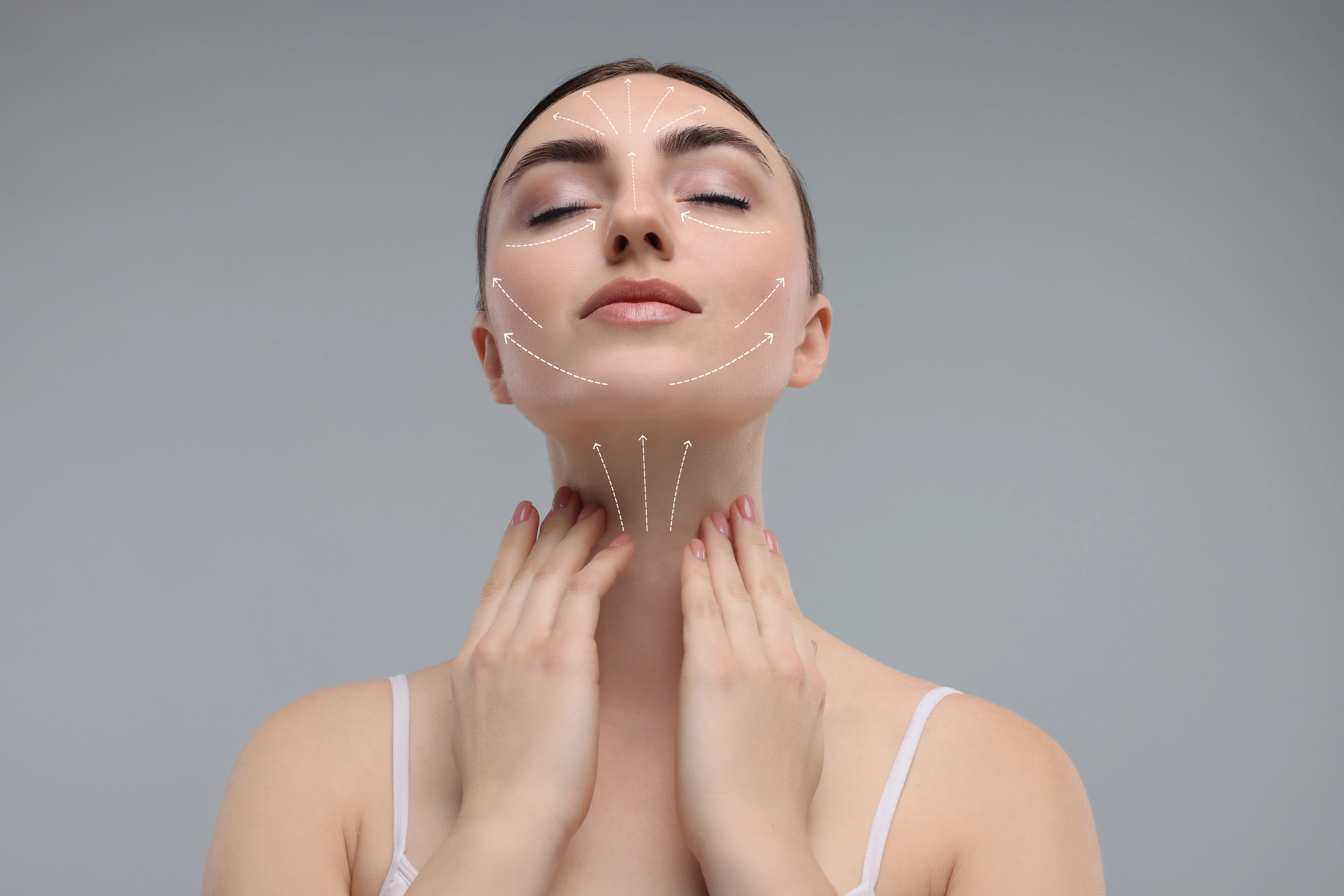
A facelift, medically known as rhytidectomy, is a surgical procedure designed to reduce visible signs of aging in the face and neck. It removes excess skin, tightens underlying tissues, and repositions facial structures for a rejuvenated, youthful appearance.
While non-surgical treatments such as Botox and fillers provide temporary results, a facelift offers long-lasting rejuvenation by addressing deeper layers of the skin and muscles.
Types of Facelift Procedures
- Traditional Facelift: Addresses sagging skin, deep folds, and jowls across the midface and neck.
- Mini Facelift: Less invasive, focusing on mild sagging in the midface and jawline.
- Mid-Facelift: Targets the cheeks and under-eye area for volume restoration.
- Neck Lift (often combined): Corrects sagging skin and fat deposits in the neck area.
How Is a Facelift Performed?
Step-by-Step Process:
- Consultation & Planning: Facial structure, skin quality, and goals are evaluated.
- Anesthesia: General anesthesia or local anesthesia with sedation is applied.
- Incisions: Typically made along the hairline and around the ears, hidden in natural folds.
- Tissue Tightening: Muscles (SMAS layer) are lifted and tightened.
- Excess Skin Removal: Loose skin is trimmed and repositioned.
- Closure: Sutures are placed for minimal visible scarring.
The procedure usually lasts 3–5 hours.
Benefits of a Facelift
- Reduction of sagging skin and jowls.
- Smoother, firmer, and more youthful facial contours.
- Long-lasting results compared to non-surgical treatments.
- Natural-looking rejuvenation without exaggerated changes.
- Improved self-confidence and appearance.
Who Is a Good Candidate?
A facelift is ideal for:
- Men and women aged 40–70 with visible facial aging.
- Patients with sagging skin, deep wrinkles, and jowls.
- Individuals in good health, without serious medical conditions.
- Non-smokers with realistic expectations.
Recovery Timeline
- First Week: Swelling, bruising, and mild discomfort are common.
- 2 Weeks: Most patients return to work and social activities.
- 1 Month: Bruising fades; facial contours refine.
- 3–6 Months: Final results become visible as healing completes.
Patients should avoid strenuous activities for at least 4 weeks.
Facelift in Turkey
Turkey is one of the most popular destinations for facelift surgeries due to:
- Expert Surgeons: Specialists in facial rejuvenation with international recognition.
- Advanced Clinics: Equipped with the latest surgical techniques.
- Affordable Costs: Up to 70% more affordable than in Europe or the US.
- Comprehensive Medical Tourism Packages: Including accommodation, transfers, and interpreters.
Risks and Side Effects
As with any surgery, facelift carries some risks:
- Temporary swelling, bruising, and numbness.
- Scarring (usually hidden in natural creases and hairline).
- Hematoma (blood accumulation).
- Infection (rare).
- Facial asymmetry (uncommon).
Selecting a highly skilled surgeon minimizes these risks.
Conclusion
A facelift (rhytidectomy) is the gold standard for reversing visible signs of aging and restoring youthful facial contours. It provides natural, long-lasting results and significantly boosts confidence.
Turkey has become a global hub for facelift procedures, offering world-class surgeons, advanced clinics, and cost-effective health tourism packages.
Ready to turn back the clock and restore your youthful appearance?
Contact us today for a free consultation and discover how a facelift in Turkey can transform your look.

 Send Us A Message
 +90 242 505 60 59

