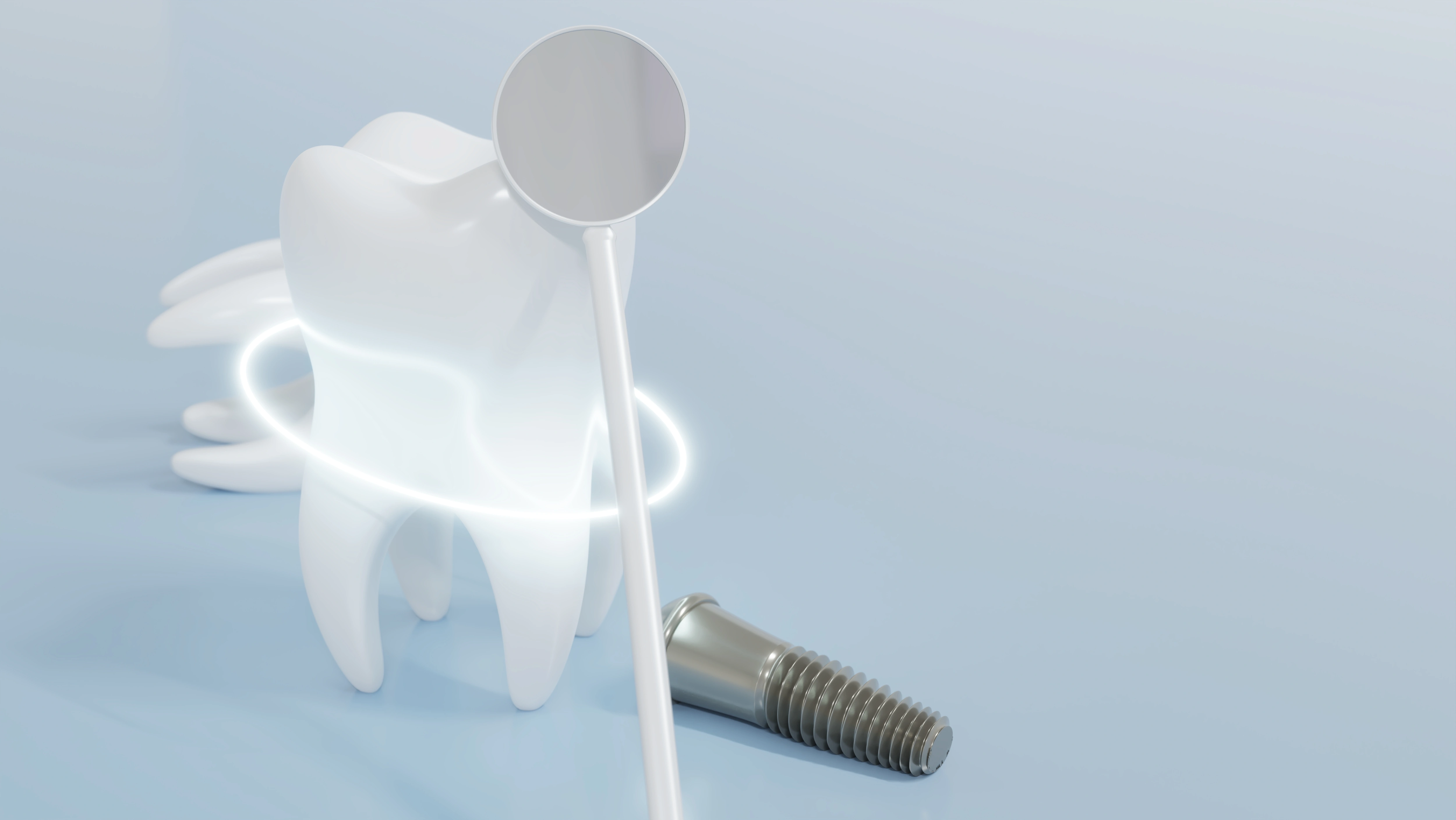
Dental implants are artificial tooth roots, usually made of titanium, that are surgically placed into the jawbone to support replacement teeth such as crowns, bridges, or dentures. They provide a long-term solution for missing teeth and closely mimic the look, feel, and function of natural teeth.
Unlike removable dentures, implants are permanent, stable, and preserve jawbone health.
How Do Dental Implants Work?
Step-by-Step Process:
- Consultation & Planning: Dental evaluation, X-rays, and 3D imaging are used to assess bone density and design the treatment plan.
- Implant Placement: A titanium screw is surgically placed into the jawbone.
- Osseointegration: The implant fuses with the bone over 3–6 months, creating a strong foundation.
- Abutment Placement: A small connector (abutment) is attached to the implant.
- Crown Placement: A custom-made crown is placed, matching the color and shape of surrounding teeth.
Types of Dental Implants
- Single Tooth Implant: For replacing a single missing tooth.
- Implant-Supported Bridge: Replaces multiple missing teeth without affecting neighboring teeth.
- All-on-4 Implants: Full-arch restoration using 4 strategically placed implants.
- Zygomatic Implants: Used when bone density is insufficient for traditional implants.
Benefits of Dental Implants
- Permanent and natural-looking tooth replacement.
- Restores chewing and speaking ability.
- Prevents jawbone loss and maintains facial structure.
- Does not affect neighboring teeth (unlike bridges).
- Long-lasting with proper oral care.
Who Is a Good Candidate?
Dental implants are suitable for:
- Adults with one or more missing teeth.
- Patients with healthy gums and adequate jawbone density.
- Non-smokers or those willing to quit during recovery.
- Individuals in good overall health.
Bone grafting may be required for patients with insufficient bone density.
Recovery Timeline
- First Week: Mild swelling, discomfort, and possible bruising.
- 2–6 Weeks: Healing progresses; temporary restorations may be worn.
- 3–6 Months: Osseointegration (bone fusion) is completed.
- Final Stage: Permanent crown or bridge is attached.
Patients should maintain excellent oral hygiene and attend follow-up appointments.
Dental Implants in Turkey
Turkey has become a top destination for dental implants due to:
- Expert Dentists: Skilled in advanced implantology techniques.
- High-Quality Materials: Use of FDA-approved titanium implants and zirconia crowns.
- Affordable Costs: Up to 70% lower compared to Europe or the US.
- Comprehensive Packages: Health tourism services include airport transfers, accommodation, and interpreters.
Risks and Complications
While highly successful, implants may involve:
- Temporary swelling and discomfort.
- Infection (rare with proper care).
- Implant failure if bone does not fuse (rare, <5%).
- Nerve damage (very rare).
- Sinus issues (for upper jaw implants).
Conclusion
Dental implants are the gold standard for tooth replacement, offering permanent, natural-looking, and functional results. They restore confidence, improve oral health, and last for decades.
Turkey has become one of the leading destinations for dental implant treatments, combining expert dentists, advanced technologies, and affordable packages for international patients.
Ready to restore your smile with permanent dental implants?
Contact us today for a free consultation and discover how dental implants in Turkey can transform your oral health.

 Send Us A Message
 +90 242 505 60 59

